Choose kitchen knives with the right blade types, handle comfort, steel, care routine, and storage for everyday cooking.
Build a useful core knife collection
You do not need a large block set to cook well. Most home kitchens can handle everyday prep with a few versatile knives chosen for the tasks you actually do.
A chef's knife is the main workhorse for chopping vegetables, herbs, and boneless proteins. A paring knife handles smaller, detailed work, while a serrated knife is useful for bread, tomatoes, and soft fruit with tough skins.
- Chef's knife: the primary all-purpose knife for most prep.
- Paring knife: peeling, trimming, and detailed work in the hand.
- Serrated knife: bread, tomatoes, citrus, and delicate pastries.
- Optional utility or boning knife: useful only if it matches your regular cooking routine.
Prioritize comfort and control
The best knife should feel balanced and secure in your hand. If possible, hold a knife before buying it and notice whether the handle feels too thick, too narrow, slippery, or uncomfortable near the knuckles.
Blade length is personal. An 8-inch chef's knife is a common all-purpose choice, while a shorter blade can feel easier to control in a compact kitchen or for smaller hands.
Understand steel without overcomplicating it
Most quality kitchen knives use stainless steel or high-carbon stainless steel. The exact steel name matters less than a good heat treatment, comfortable geometry, and a brand that provides clear care guidance.
Some blades hold an edge longer but may be harder to sharpen; others sharpen easily but need more frequent touch-ups. Choose a knife you can maintain consistently rather than chasing a technical specification that does not suit your routine.
Use the right cutting surface and storage
A wood or quality plastic cutting board is gentler on an edge than glass, stone, or ceramic. Avoid cutting directly on a countertop or plate, as hard surfaces can dull or damage the blade quickly.
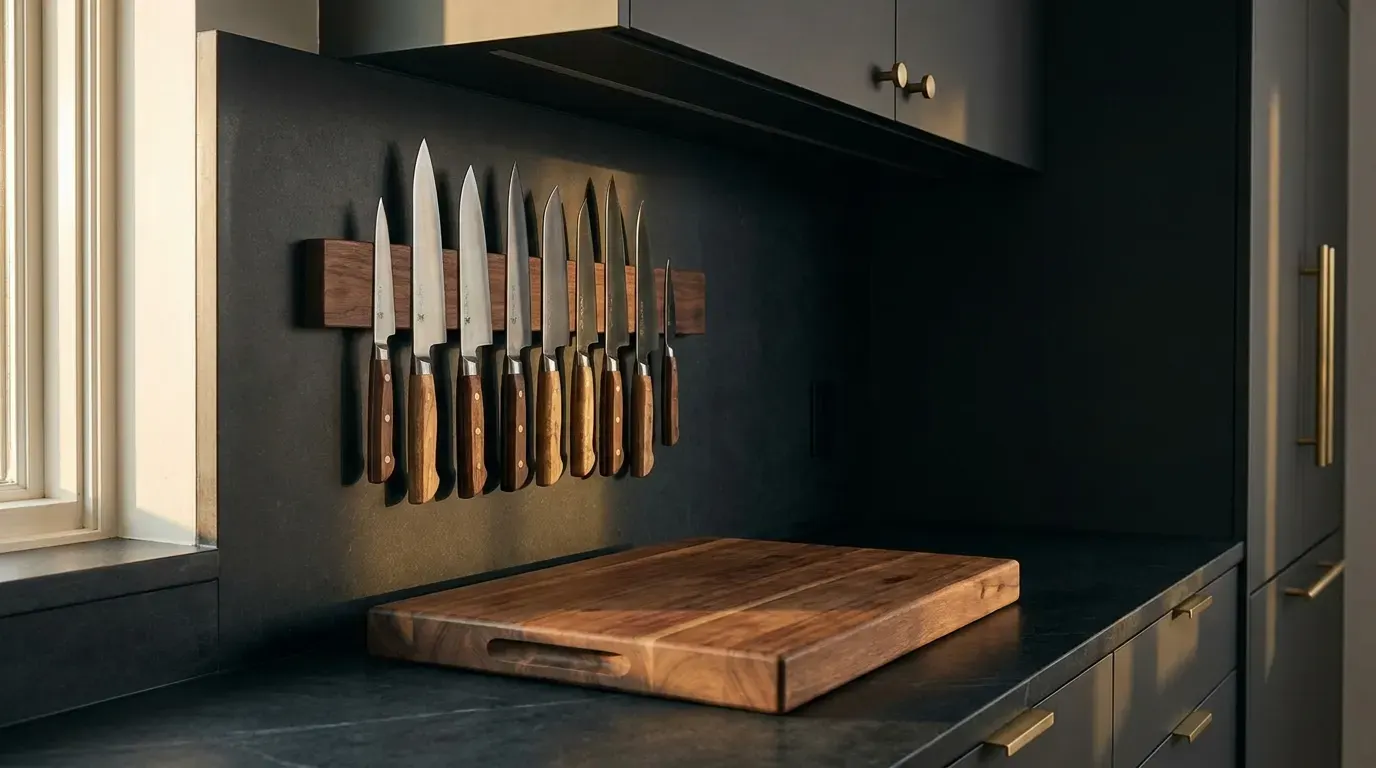
Store knives so the edges do not knock against other utensils. A knife block, magnetic strip, blade guards, or an in-drawer organizer can all work when used safely and kept clean.
Keep knives sharp and clean
A sharp knife is generally easier to control than a dull one because it requires less force. Hone a knife as needed to realign the edge, and sharpen it when honing no longer restores cutting performance.
Hand-wash and dry quality knives soon after use. Dishwashers can expose blades and handles to heat, moisture, and contact with other utensils, which may shorten their lifespan.
Frequently asked questions
How many kitchen knives do I really need?
Many home cooks can cover most tasks with a chef’s knife, a paring knife, and a serrated knife. Add specialty blades only when you have recurring tasks that need them.
How can I tell when a knife needs sharpening?
If honing no longer restores a clean, controlled cut, the edge may need sharpening. Use a method appropriate for the knife and its manufacturer’s guidance; some blade geometries need specialized care.
Can quality knives go in the dishwasher?
Hand-washing and drying promptly is the safer routine for most kitchen knives. Dishwasher heat, moisture, and contact with other items can damage edges or handles.
Prepared by
KitchenTrusted Editorial
Product details and availability can change. Always confirm current information with the manufacturer or seller before purchase.