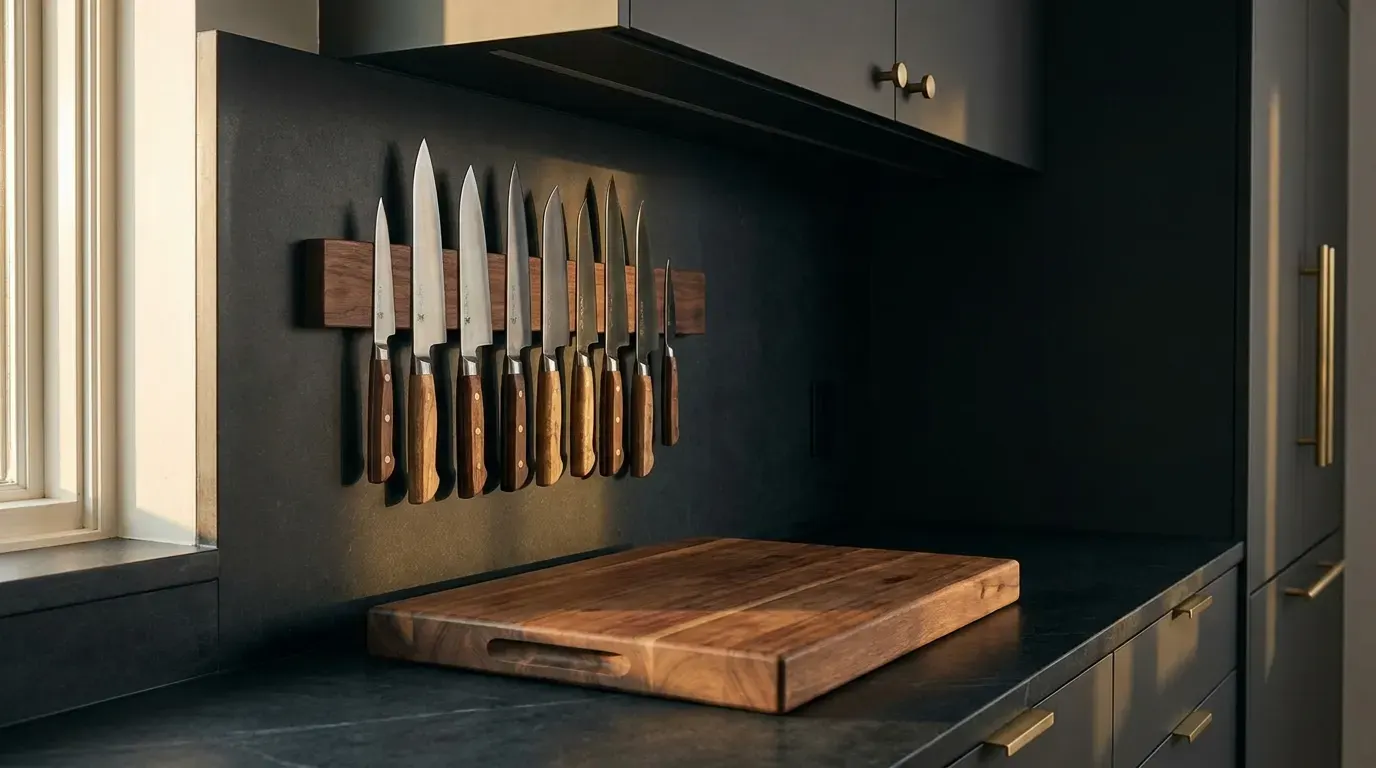
Keep a wooden cutting board clean, smooth, and ready for daily prep with simple washing, drying, and oiling habits.
Wash your board promptly after use
Wash a wooden cutting board by hand with warm water, mild dish soap, and a soft sponge or brush. Clean both sides, even if you used only one, so the board absorbs moisture evenly and is less likely to warp.
For sticky residue or food odors, use a little coarse salt with half a lemon as a gentle scrub, then rinse and dry the board thoroughly. Do not use bleach or harsh abrasive cleaners unless the board manufacturer specifically recommends them.
Dry it upright, not flat
After washing, towel-dry the board and stand it on its edge or in a rack where air can circulate around both sides. Leaving a damp board flat on the counter traps moisture underneath and can encourage warping.
Avoid placing a wet board near a radiator, in direct hot sun, or against an active heat source. Rapid drying can pull moisture out unevenly and lead to cracks.
Oil the wood when it looks dry
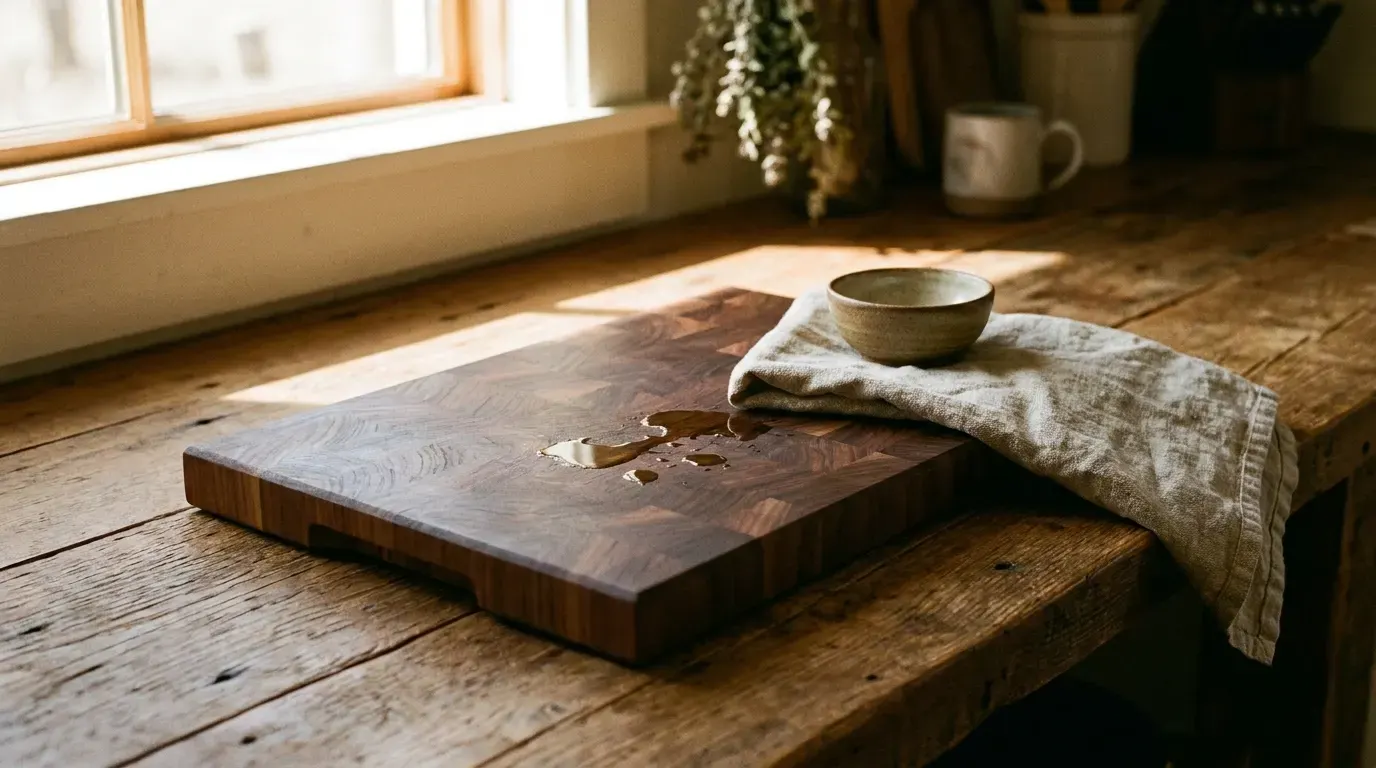
Food-safe mineral oil helps reduce water absorption and keeps the surface from becoming rough or dry. Apply a small amount with a clean cloth, allow it to soak in, then wipe away any excess after a few hours or overnight.
How often you oil the board depends on use and climate. A board that looks pale, feels rough, or absorbs water quickly is ready for another light treatment.
- Use food-safe mineral oil or a board conditioner intended for food-contact surfaces.
- Avoid cooking oils such as olive, sunflower, or vegetable oil because they can become sticky or rancid.
- Treat the edges and both sides, not only the cutting surface.
Prevent deep cuts, odors, and cross-contamination
Use separate boards for raw meat and ready-to-eat foods when possible. Deep knife grooves are harder to clean, so periodically inspect the surface and sand minor rough spots only if the board manufacturer permits it.
A dedicated plastic board can be useful for raw poultry or fish, while a well-maintained wooden board is excellent for vegetables, bread, fruit, and general prep.
Know when to repair or replace it
Small surface scratches are normal and can often be smoothed. Replace the board if it develops a deep crack, separated joints, persistent odor after thorough cleaning, or damage that prevents you from cleaning it effectively.
Good care makes a quality board last much longer, but food safety and a stable cutting surface should always come first.
Frequently asked questions
Can a wooden cutting board go in the dishwasher?
No. Prolonged heat and moisture can warp, split, or damage joints in a wooden board. Wash it by hand and dry it promptly.
What oil is safe for a cutting board?
Use food-grade mineral oil or a conditioner explicitly intended for food-contact wooden boards. Avoid ordinary cooking oils that can oxidize or leave sticky residue.
How often should I oil a wooden board?
There is no universal schedule. Reapply a light coat when the wood looks dry or absorbs water quickly, following the board maker’s care instructions.
Prepared by
KitchenTrusted Editorial
Product details and availability can change. Always confirm current information with the manufacturer or seller before purchase.