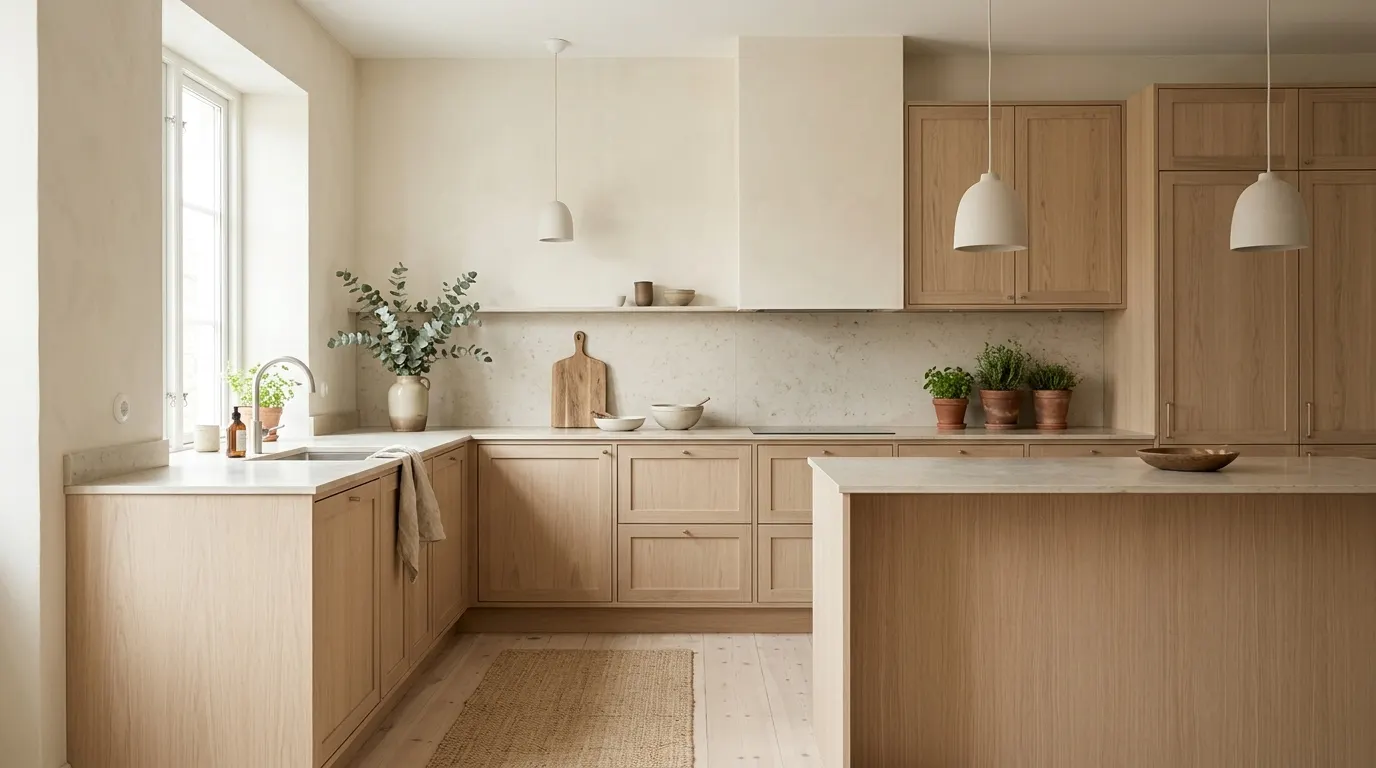
Build the room around natural materials
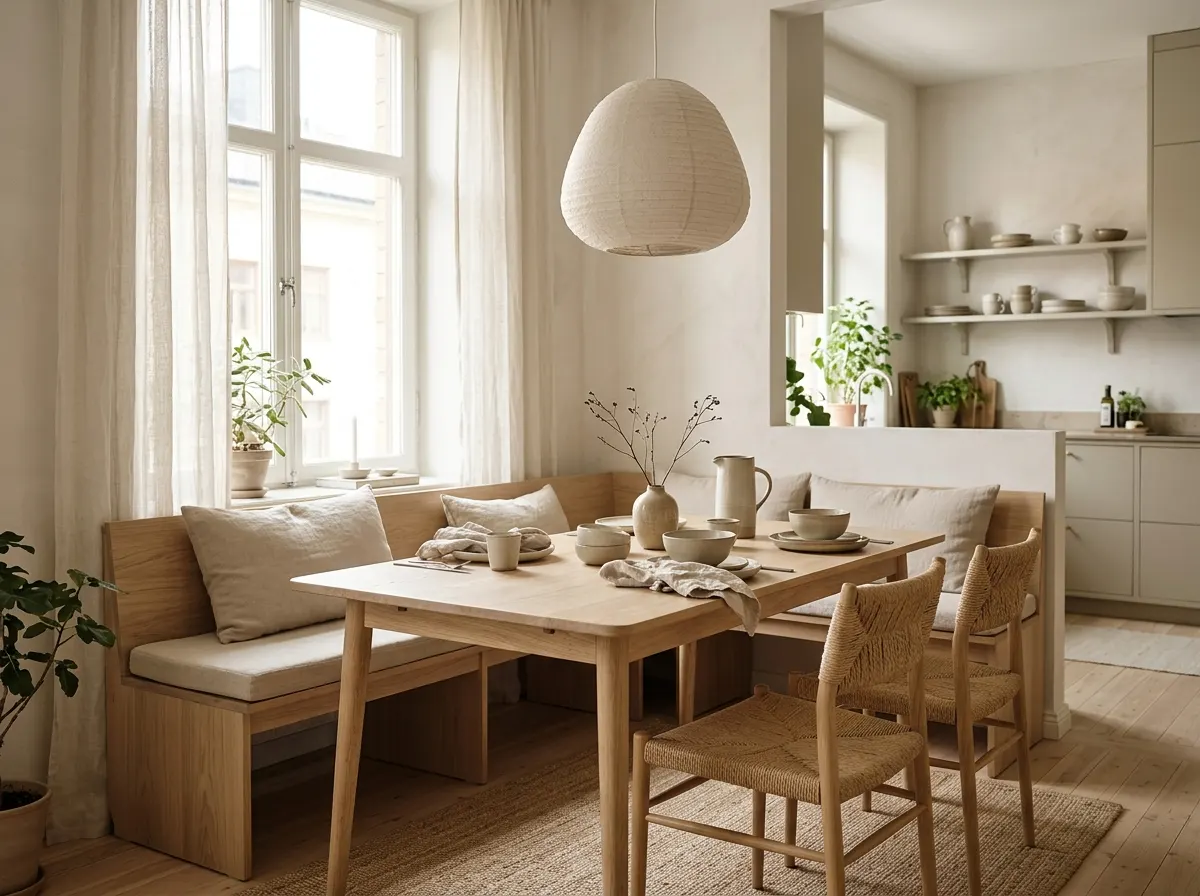
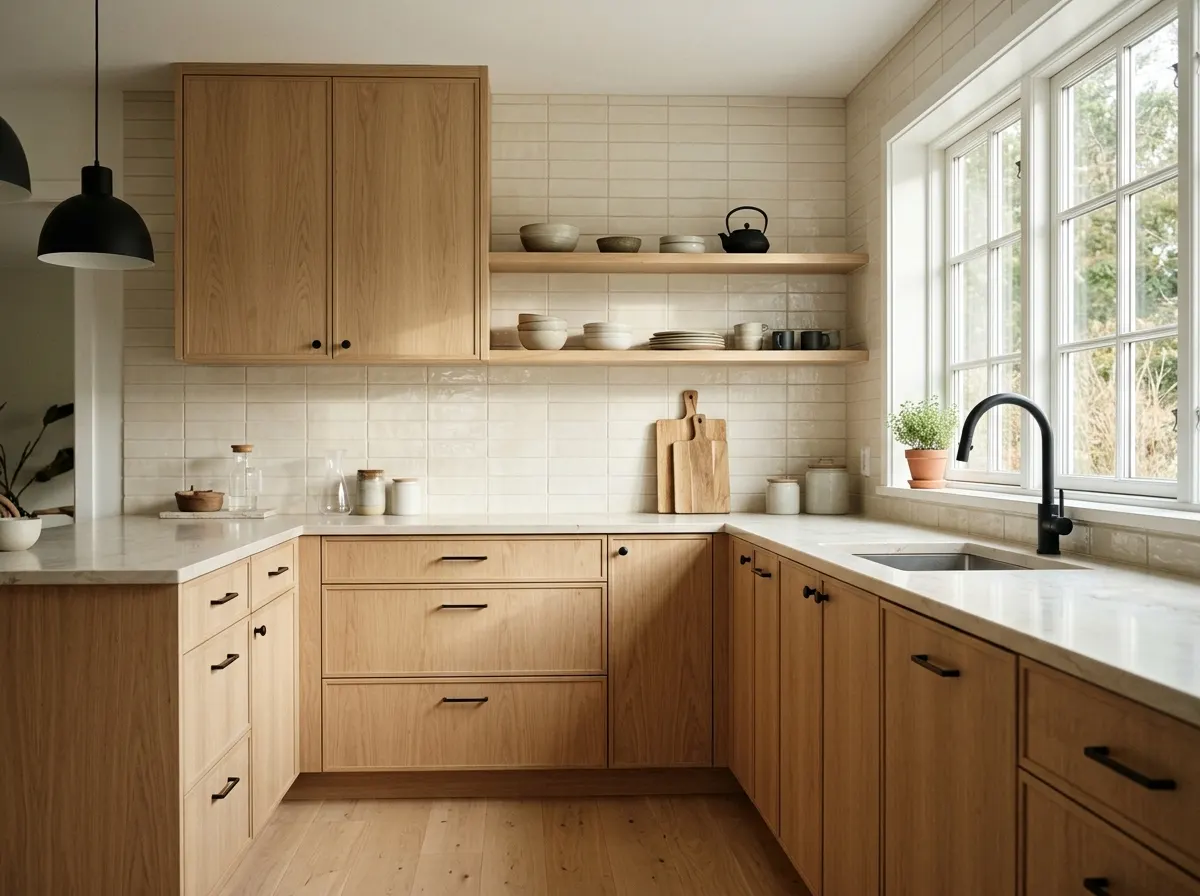
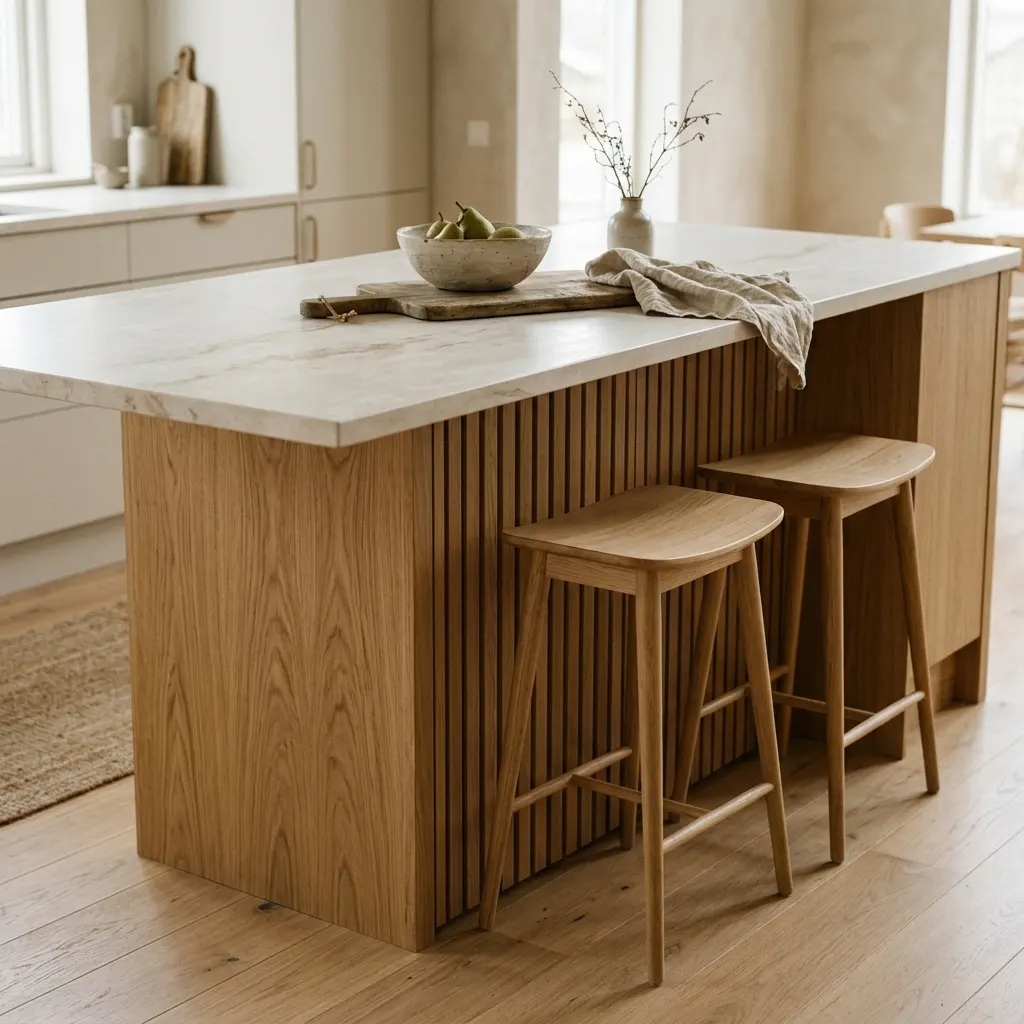
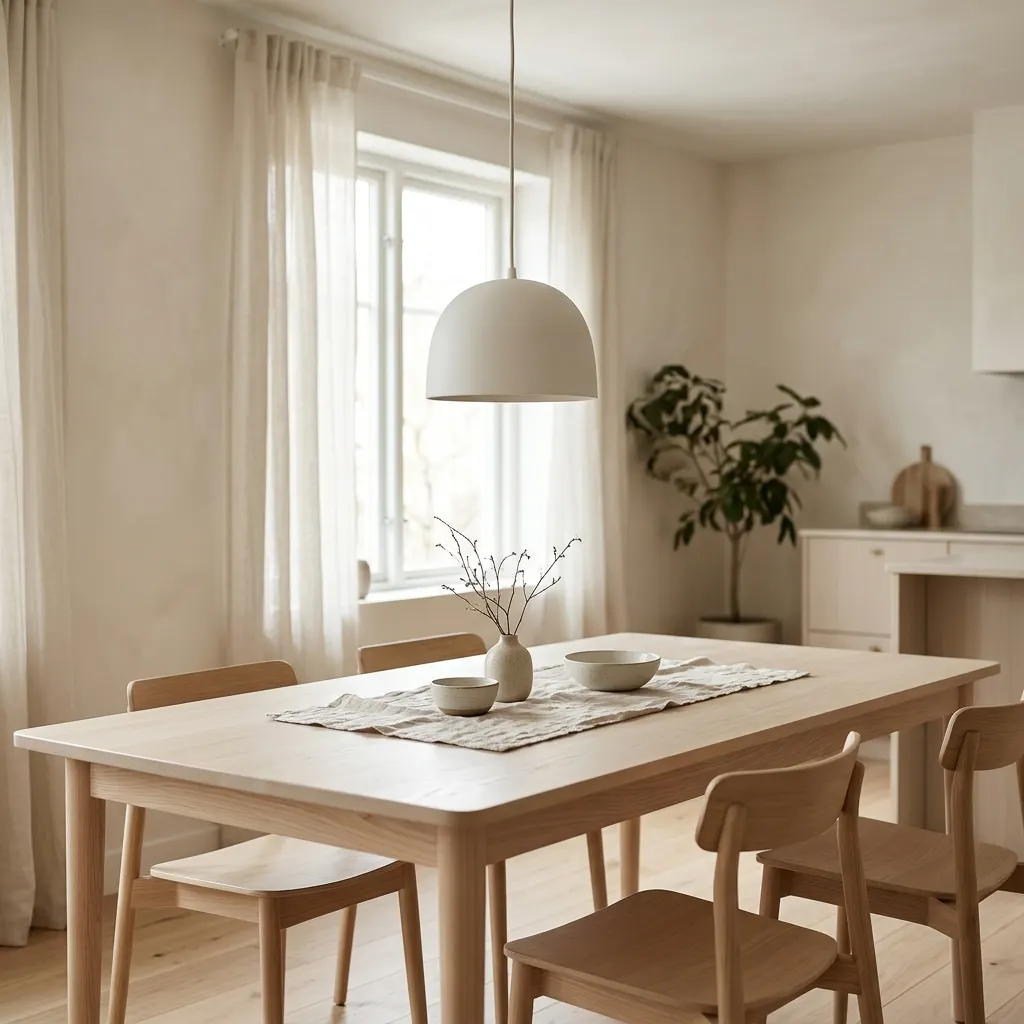
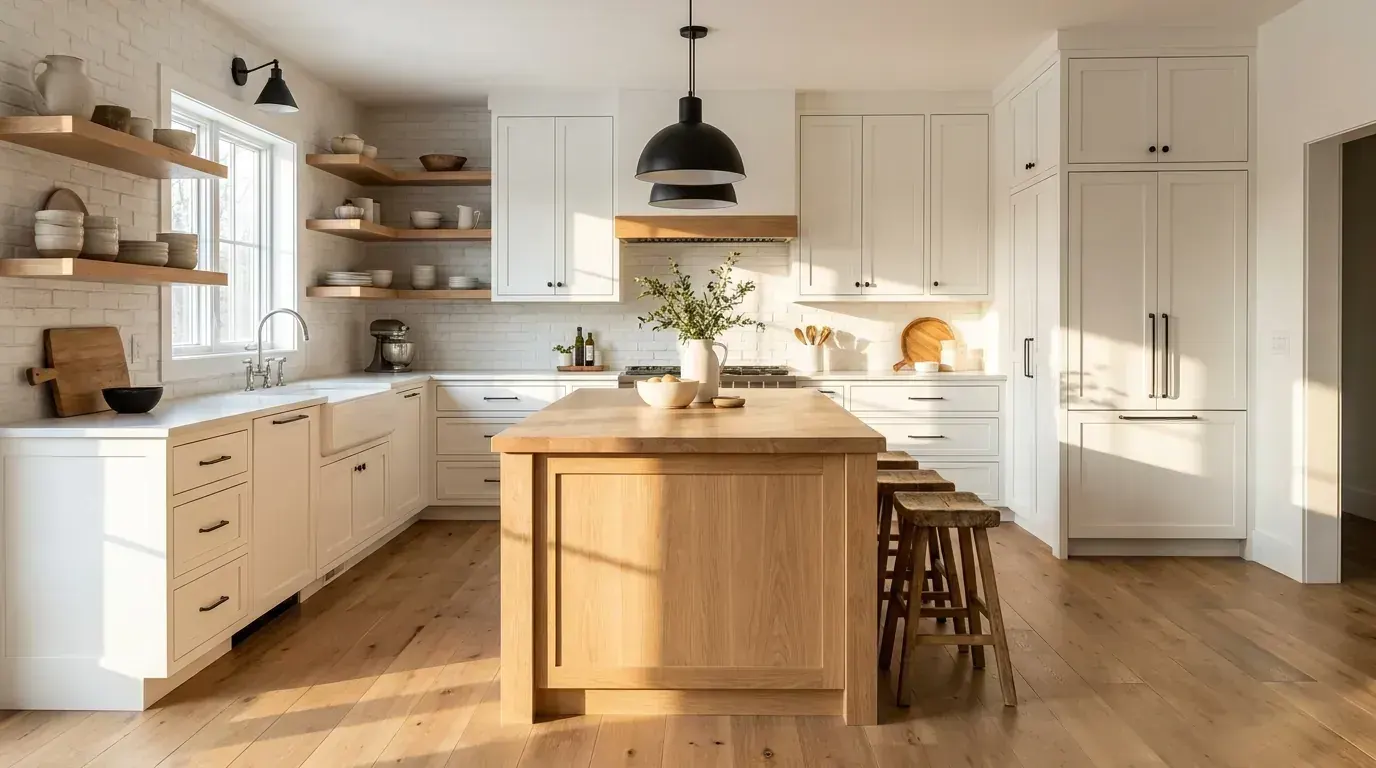
Light oak, ash, or birch brings warmth to a Scandinavian kitchen without making it feel heavy. Pair wood cabinetry or open shelving with a pale stone or light-colored worktop, then repeat a few natural textures such as linen, woven seating, or matte ceramics.
Keep the palette limited so the wood grain and daylight can do the work. A small amount of black or brushed metal can add definition, but the overall look should remain soft and balanced.
Choose a calm, practical color palette
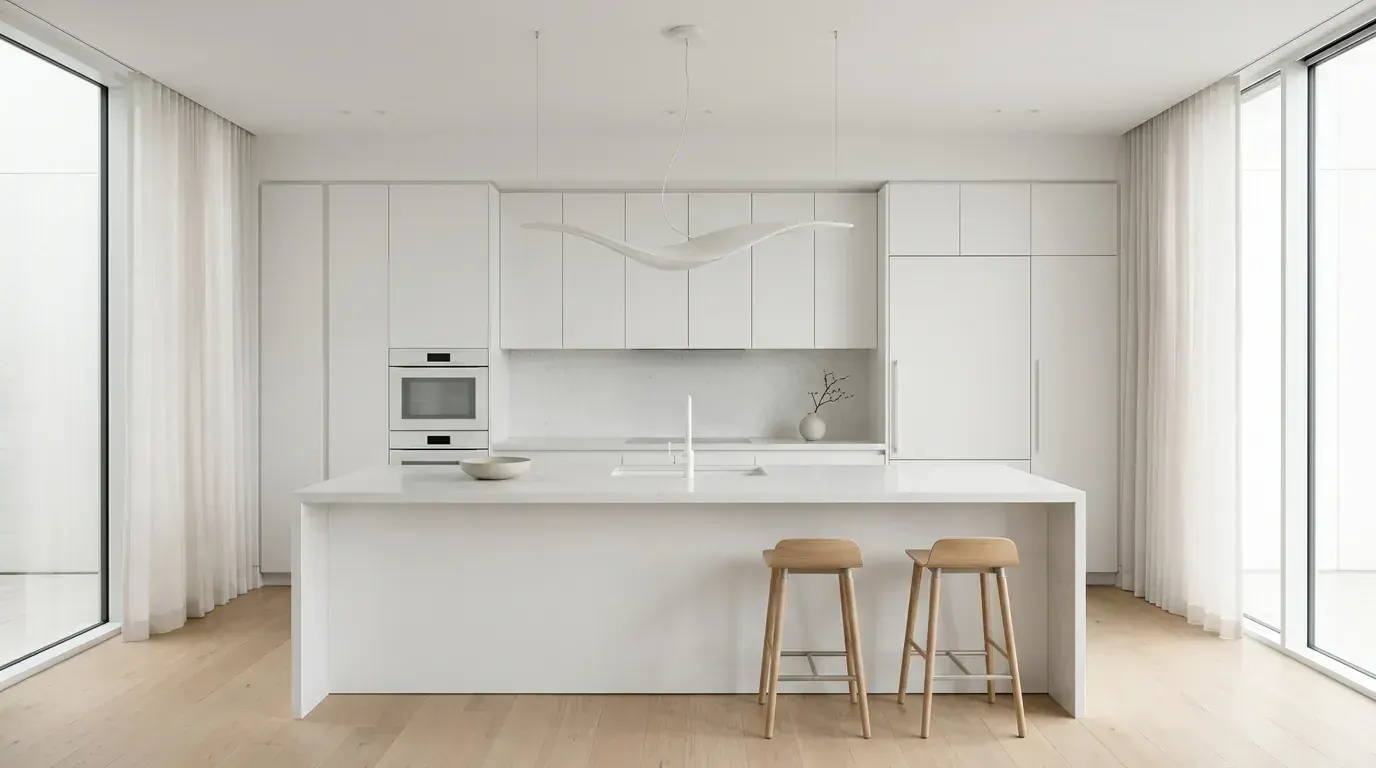
Cream, warm white, muted gray, and pale beige are useful backdrops for light wood. These shades reflect natural light and make it easier to update accessories later without redesigning the whole kitchen.
Instead of adding many accent colors, introduce personality through a few ceramics, a plant, a favorite textile, or a colored dining chair. Small accents are easy to change as your preferences evolve.
Make everyday storage easy to maintain
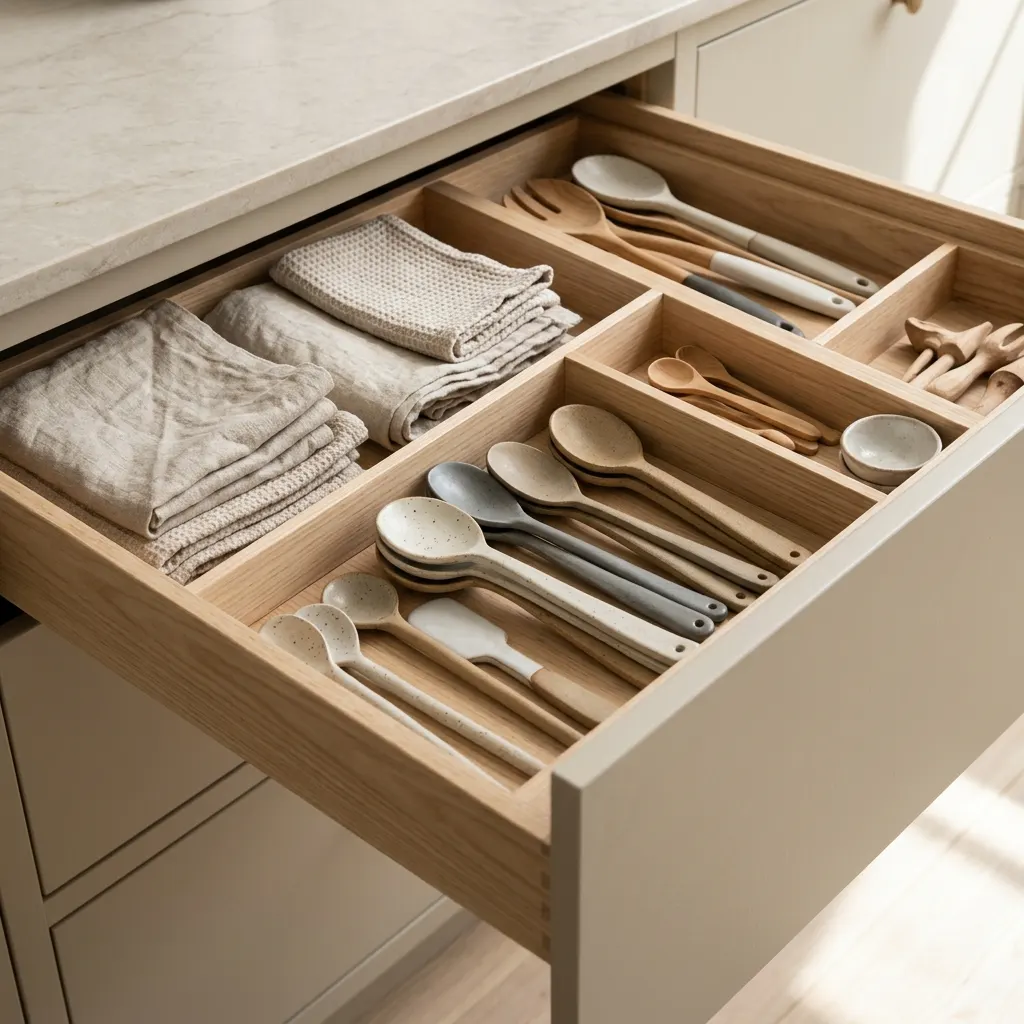
A calm kitchen still needs to work hard. Wide drawers, clear pantry zones, and storage near the places where you prepare and cook food reduce clutter and unnecessary steps.
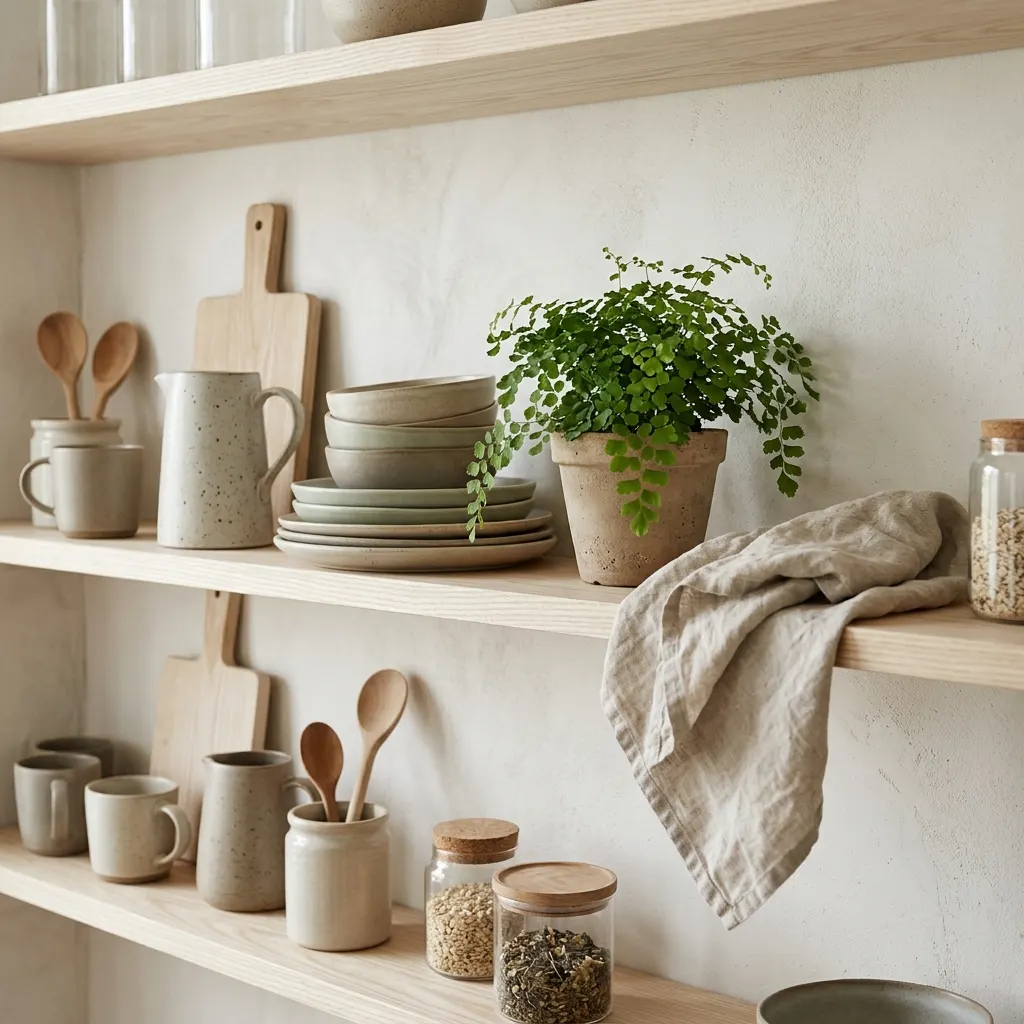
Use open shelves selectively for items you reach for often. Keep less attractive or rarely used equipment behind doors so the room remains simple to tidy.
- Store cooking tools close to the cooktop and prep tools near the main work surface.
- Use drawer dividers for cutlery and utensils to keep small items organized.
- Choose a few durable accessories instead of filling counters with decoration.
Layer light for long, comfortable days
Scandinavian design makes thoughtful use of daylight, but kitchens also need reliable light after sunset. Combine general ceiling lighting with focused task lights over counters and a warm pendant above an island or table.
Choose warm, comfortable color temperatures for dining and general use, with brighter task lighting where you chop, read recipes, and clean. Dimmers can make one room work for both meal preparation and relaxed evenings.
Keep the room warm without making counters busy
Natural textures make a restrained palette feel welcoming: wood grain, woven fibers, linen, and handmade-looking ceramics can add softness without introducing many colors. Choose a few accents with a clear purpose and leave the rest of the work surface free.
For a compact kitchen, use pale finishes and consistent cabinet fronts to reduce visual breaks, then bring in warmth through a stool, dining table, or movable accessories. A coherent small palette is easier to update than a collection of permanent statement finishes.
- Use task lighting where food is prepared, not only decorative pendants.
- Repeat a small number of natural materials rather than mixing many textures.
- Keep everyday objects accessible and store occasional equipment out of sight.