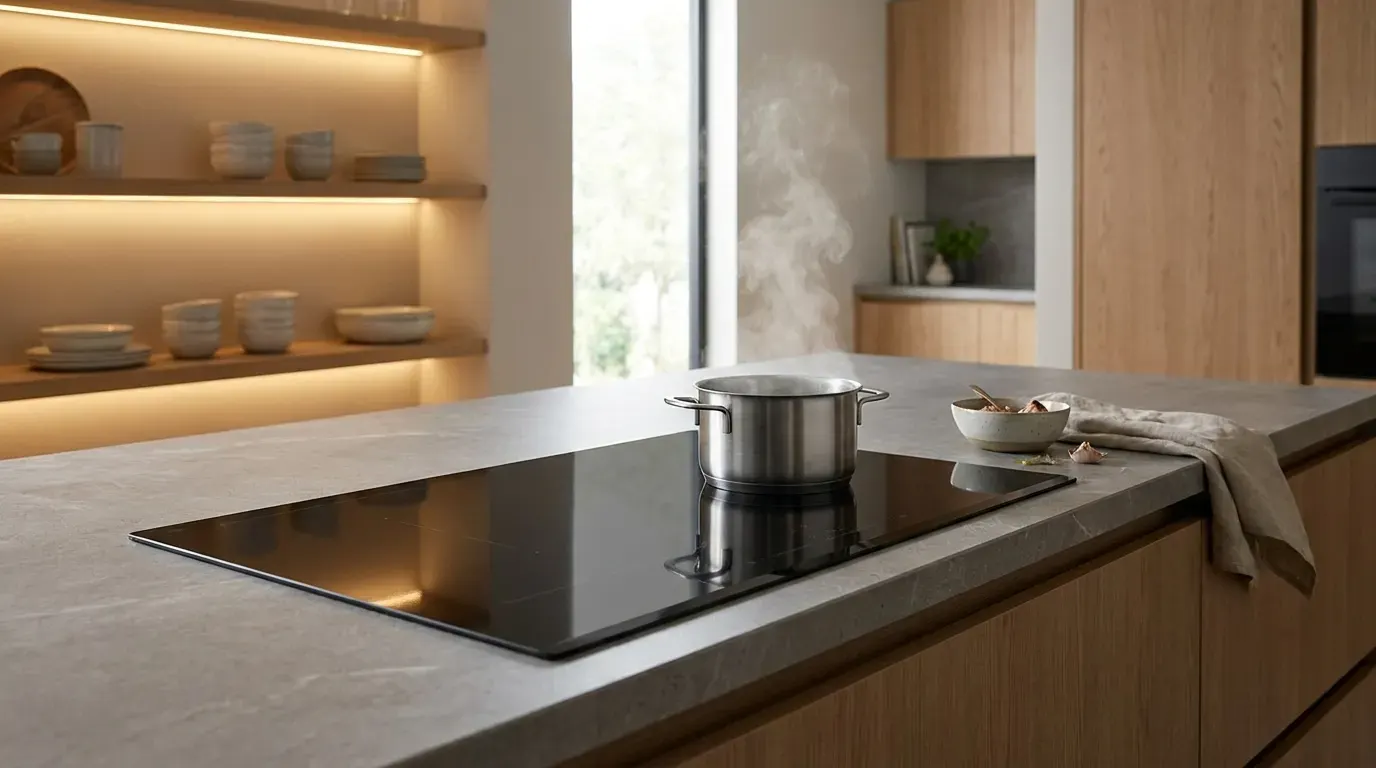
Understand how induction cooktops work, which cookware is compatible, and what to check before adding one to your kitchen.
How induction cooking works
Induction cooktops use a magnetic field to heat compatible cookware directly. The cooking surface itself does not create heat in the same way as a traditional electric coil; instead, the pan generates heat when it is placed on an active zone.
This direct approach can make changes in temperature feel responsive and gives cooks more control over simmering, boiling, and everyday pan cooking.
Why many kitchens are choosing induction
A flat glass surface gives induction cooktops a clean, minimal look and makes daily wipe-downs straightforward once the surface has cooled. Fast heating, precise control, and a compact visual profile are common reasons homeowners consider it during a kitchen update.
Induction can also keep the immediate cooking area more comfortable because energy is focused in the cookware rather than an exposed heating element. Good ventilation is still important for cooking fumes and steam.
Check cookware compatibility
Induction needs cookware with a magnetic base. Cast iron and many stainless-steel pans are compatible, while aluminum, copper, glass, and ceramic cookware may need a magnetic base layer to work.
The simplest check is a magnet test on the bottom of the pan. Also make sure the base is flat enough to sit securely on the cooking zone for reliable heat transfer.
- Usually compatible: cast iron, enameled cast iron, and magnetic stainless steel.
- May be compatible: multi-layer cookware with a magnetic stainless base.
- Usually incompatible without a special base: pure aluminum, copper, glass, and ceramic.
Plan for installation and electrical requirements
Before choosing a cooktop, confirm the cutout dimensions, ventilation requirements, and electrical specifications with a qualified installer. A new induction cooktop may require a dedicated circuit or electrical work depending on the model and your existing kitchen setup.
Review the manufacturer's installation manual early in the planning process, especially if you are replacing gas or changing the countertop at the same time.
Decide whether induction suits your routine
Induction is a strong option for cooks who want responsive heat, easy surface cleanup, and a streamlined kitchen design. It may be less convenient if most of your cookware is incompatible or if your kitchen would need significant electrical changes.
The best decision comes from checking your cookware, kitchen wiring, cooking habits, and budget together—not from choosing based on a trend alone.
Frequently asked questions
How can I tell whether my cookware works on induction?
Try a magnet on the flat base. If it holds firmly, the pan is generally magnetic enough, but still confirm compatibility and minimum pan size in the cooktop manual.
Will I need new cookware for an induction cooktop?
Not necessarily. Many cast-iron and magnetic stainless-steel pans work, while some aluminum, copper, glass, or ceramic pieces do not unless they have a compatible magnetic base.
Can I replace a gas cooktop with induction myself?
Installation requirements depend on the cooktop, electrical service, cabinetry, and local rules. Check the installation manual and have a qualified professional assess wiring and fit before purchase.
Prepared by
KitchenTrusted Editorial
Product details and availability can change. Always confirm current information with the manufacturer or seller before purchase.