Choose a kitchen sink by checking cabinet and cutout fit first, then compare mounting style, bowl layout, material, depth, faucet holes, and drain clearance.
Choose a mounting style first
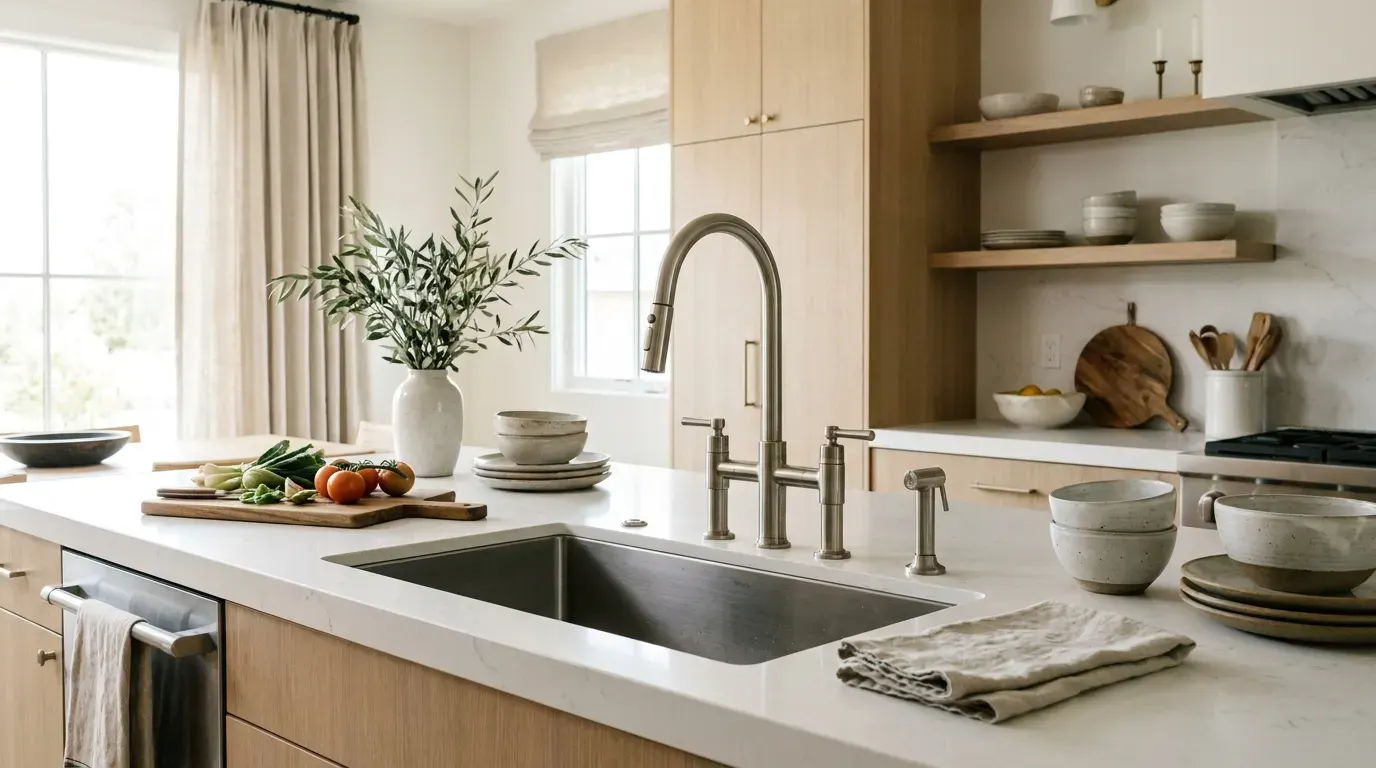
An undermount sink is installed beneath the countertop, creating a smooth edge that makes wiping crumbs into the bowl easier. It works particularly well with solid-surface counters such as stone or quartz, but installation needs proper support.
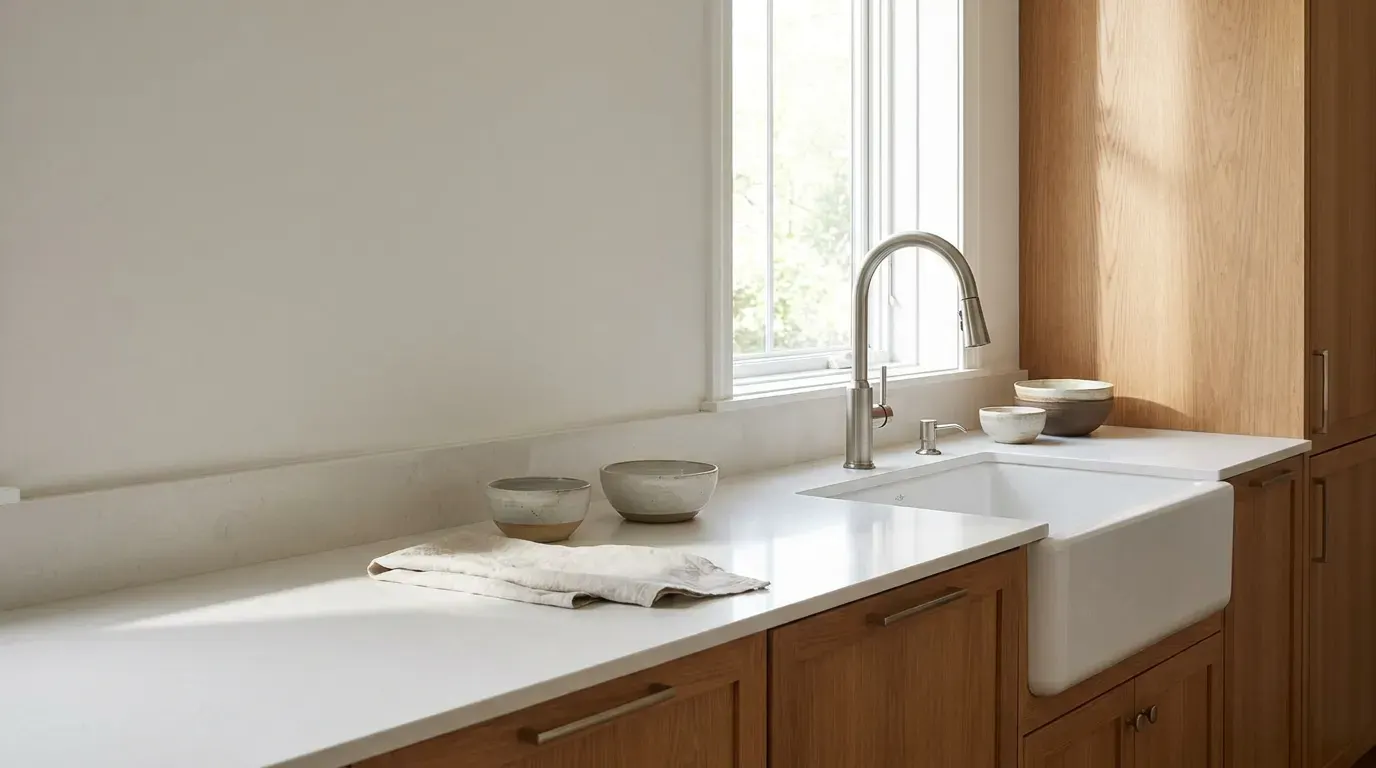
A drop-in sink rests on top of the counter with a visible rim. It can suit many countertop materials and is often straightforward to replace. Farmhouse or apron-front sinks create a strong visual focal point but may require a compatible cabinet or cabinet modification.
Match the material to your routine
Stainless steel is lightweight, versatile, and common in modern kitchens. Fireclay creates a classic, substantial look and is often chosen for farmhouse sinks. Composite granite offers a matte appearance and comes in several colors, while cast iron with an enamel coating gives a traditional finish.
Each material has different cleaning needs, weight, and resistance to scratches or impact. Check the manufacturer's care guidance and think about the cookware you use most often before deciding.
Pick a bowl layout that supports your prep
A single large bowl gives you more room for sheet pans, roasting dishes, and stockpots. A double bowl lets you separate washing and rinsing, or keep dirty dishes apart from food prep. The best option depends on your cooking habits and whether you use a dishwasher regularly.
- Single bowl: useful for bulky cookware and simple cleanup.
- Equal double bowl: helpful if you often wash and rinse by hand.
- Offset double bowl: gives one larger workspace plus a smaller utility bowl.
- Workstation sink: can add ledges for accessories such as a drying rack or cutting board.
Check depth, cabinet space, and drain position
A deeper sink hides dishes and can make washing large cookware easier, but it also changes the height of the working surface. Consider who uses the kitchen most and whether a very deep bowl will feel comfortable during longer cleanup sessions.
Check the sink's exterior dimensions, required cabinet width, drain placement, and clearance for garbage-disposal units or water filters. These details prevent surprises during installation.
Coordinate the sink with your faucet
Your faucet should reach near the middle of the main bowl and leave enough clearance for tall cookware. Confirm the number of faucet holes, the location of accessory holes, and whether the faucet's spray head can reach both bowls if you choose a double sink.
A balanced sink-and-faucet combination is easier to use, easier to clean, and looks more intentional than choosing each piece separately.
Frequently asked questions
Is a single-bowl or double-bowl sink better?
A single bowl gives more uninterrupted room for large pans. A double bowl can separate washing, rinsing, or prep tasks. Choose according to cookware size, dishwasher use, and how you work at the sink.
Which kitchen sink material is easiest to maintain?
There is no one answer: stainless steel, fireclay, enamel, and composite surfaces have different care needs and can react differently to impact, scratches, and hard water. Compare the maker’s cleaning instructions and warranty.
How do I know what sink size fits?
Measure the inside cabinet width, counter cutout, sink depth, drain and disposal clearance, and faucet-hole layout. Confirm the minimum cabinet size in the product’s installation sheet.
Prepared by
KitchenTrusted Editorial
Product details and availability can change. Always confirm current information with the manufacturer or seller before purchase.