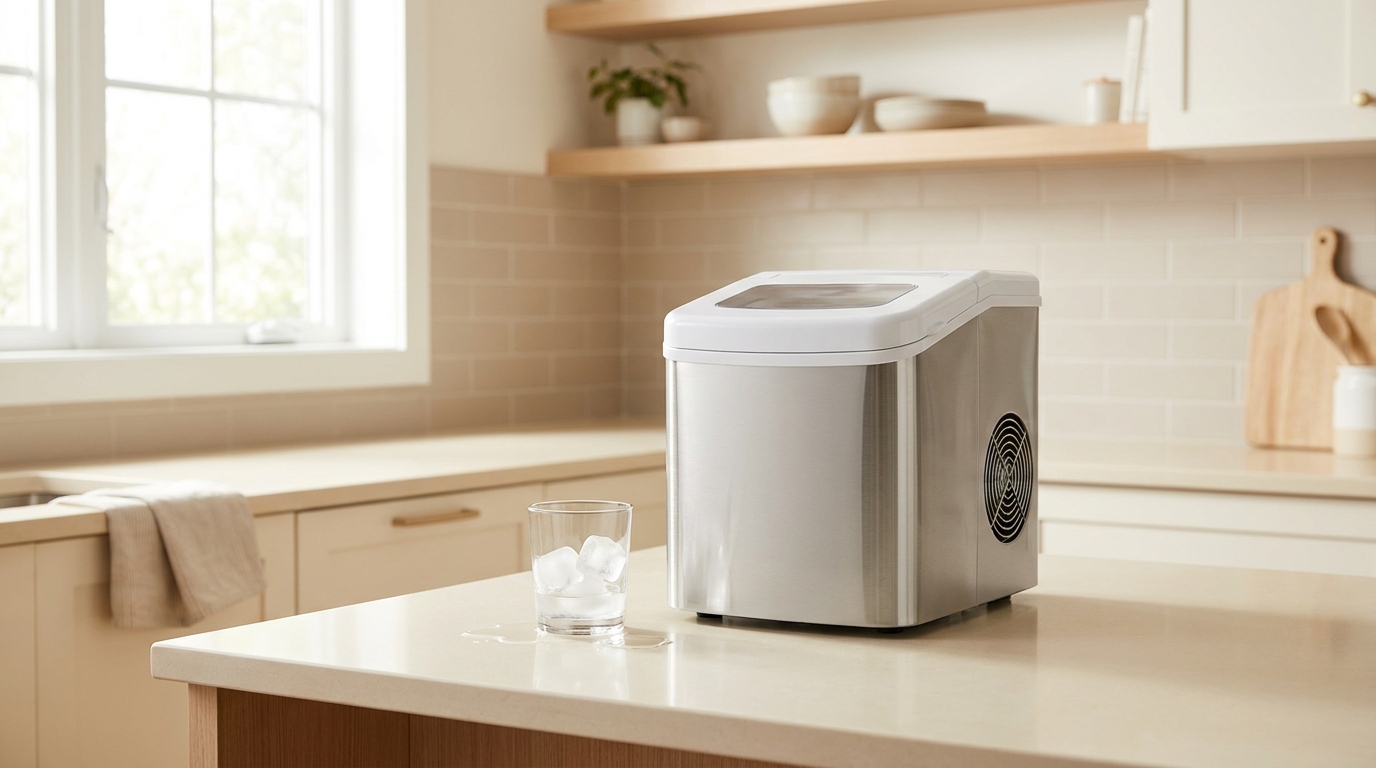
Choose a countertop ice maker by comparing ice type, stated daily output, basket capacity, first-batch time, counter fit, water setup, and cleaning for the exact model.
Start with the kind of ice you want
Countertop machines can make different ice shapes and sizes, and those formats are not interchangeable. Think about the drinks and serving style you use most, then confirm the machine makes the type of ice you actually want.
Read the exact model description and manual rather than relying on a product photo. Names such as bullet, nugget, or clear ice describe different results and can refer to different machine designs.
Separate daily output from basket capacity
A production figure describes how much ice a machine may make over a period of time under stated conditions. Basket capacity describes how much ice it can hold at once. A high daily-output number does not mean the basket stores that amount or that it will be ready in one batch.
Compare the first-batch estimate separately from ongoing production. Results and timing can vary with the model, room conditions, water temperature, and how the machine is used, so check the manufacturer’s test notes and operating guidance.
- Daily production: the maker’s stated output over a day or other interval.
- Basket capacity: the amount the removable basket holds at one time.
- First-batch time: the stated wait for the first ice after starting a cycle.
Measure the counter and the working space
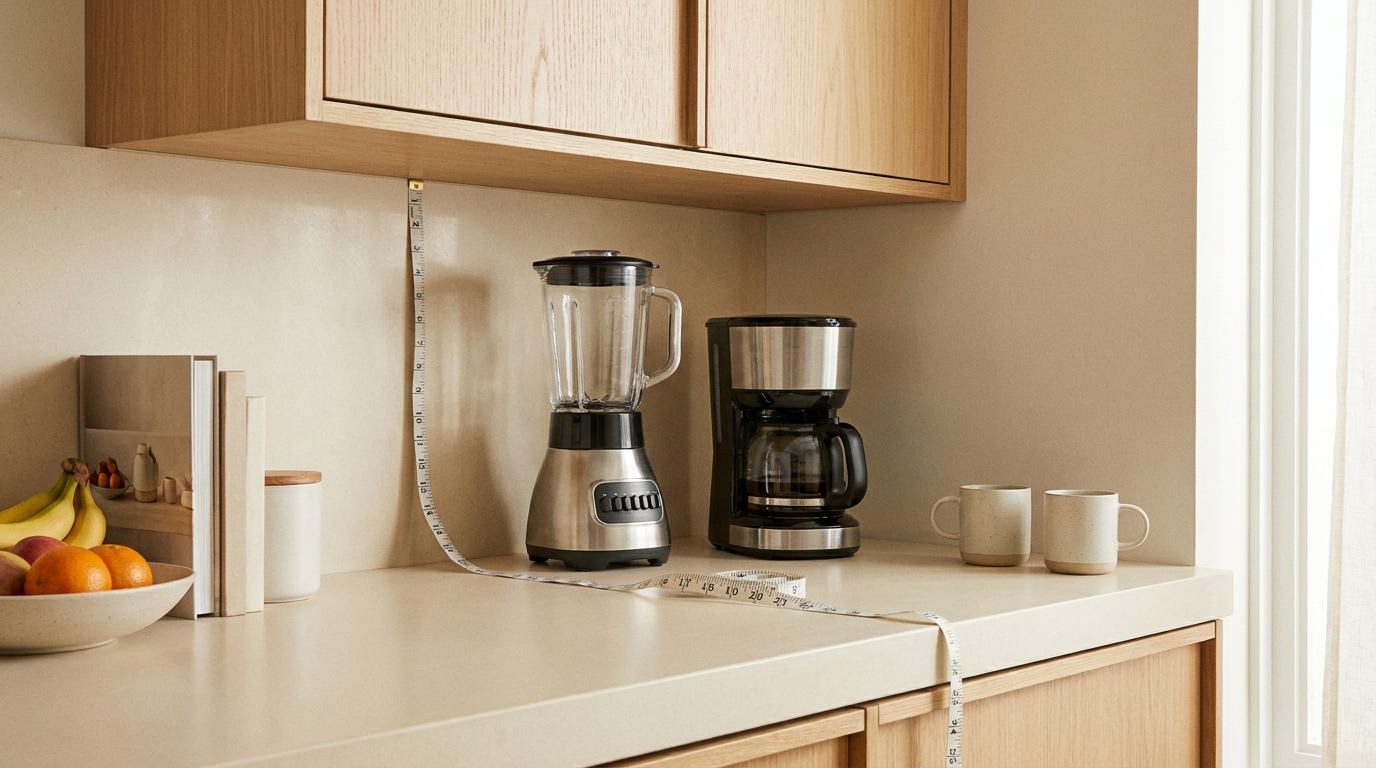
Check the machine’s full width, depth, and height against the space where you plan to use it. Leave room to open the lid, lift out the basket, add water, drain the unit, and reach any controls.
Vent locations and required clearance differ by model. Follow the manual’s placement instructions, and do not assume a machine can be pushed flush against a wall or placed in a tight cabinet while operating.
Check filling, draining, and cleaning
Some countertop machines use a refillable reservoir; other models may offer different water connections or drainage arrangements. Confirm how the exact unit is filled and emptied, and whether a drain plug or nearby sink access is needed where you plan to use it.
Look for clear cleaning instructions, including how often to clean the reservoir and ice-contact surfaces and whether the model has a cleaning cycle. Use only the cleaning method and products permitted by the manufacturer.
Review everyday operation and support
Think about where the unit will sit, when it will run, and how often you will refill and clean it. Check the product listing and manual for sound information, indicator lights, auto-stop behavior, warranty coverage, and support or replacement-part details.
Many compact ice makers are designed to produce ice rather than preserve it like a freezer. Storage and melt-water behavior vary, so check the specific model’s instructions before planning to leave ice in its basket for a long period.
Frequently asked questions
What is the difference between daily ice production and basket capacity?
Daily production is the maker’s stated output over time; basket capacity is the amount it can hold at one time. Compare both, along with the time to the first batch.
Does a countertop ice maker keep ice frozen?
Storage behavior varies. Many compact machines are designed to make ice rather than work as a freezer, so check the exact model’s instructions for what happens to ice and melt water in the basket.
How much room should I leave around an ice maker?
Use the clearance and ventilation guidance in the specific model’s manual. Also allow practical room to open the lid, remove the basket, refill, and clean the machine.
Do countertop ice makers need a water line?
Water setup varies by model. Check whether the unit uses a refillable reservoir or another connection, and confirm how it drains before choosing a location.
Prepared by
KitchenTrusted Editorial
Product details and availability can change. Always confirm current information with the manufacturer or seller before purchase.